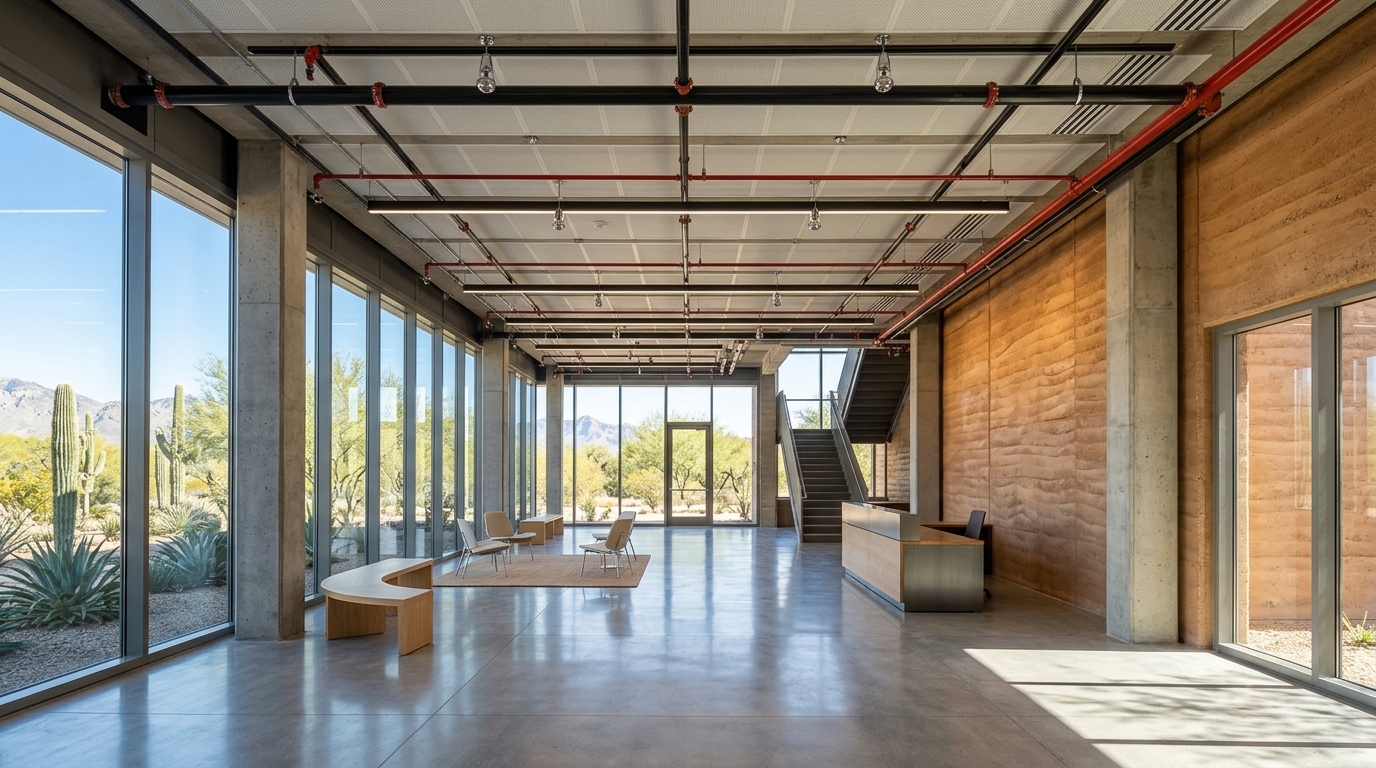
Tucson Fire Sprinkler Installation, Inspection & Repair
Fire sprinkler design, installation and NFPA 25 testing for Tucson commercial, university-area, healthcare and new residential projects.
Installation · Inspection & testing · Retrofit · Backflow & fire pump service — Desert heat and hard water, university-area multifamily, healthcare and foothills residential
Free Fire Sprinkler Quote
Tucson Fire Sprinkler Services
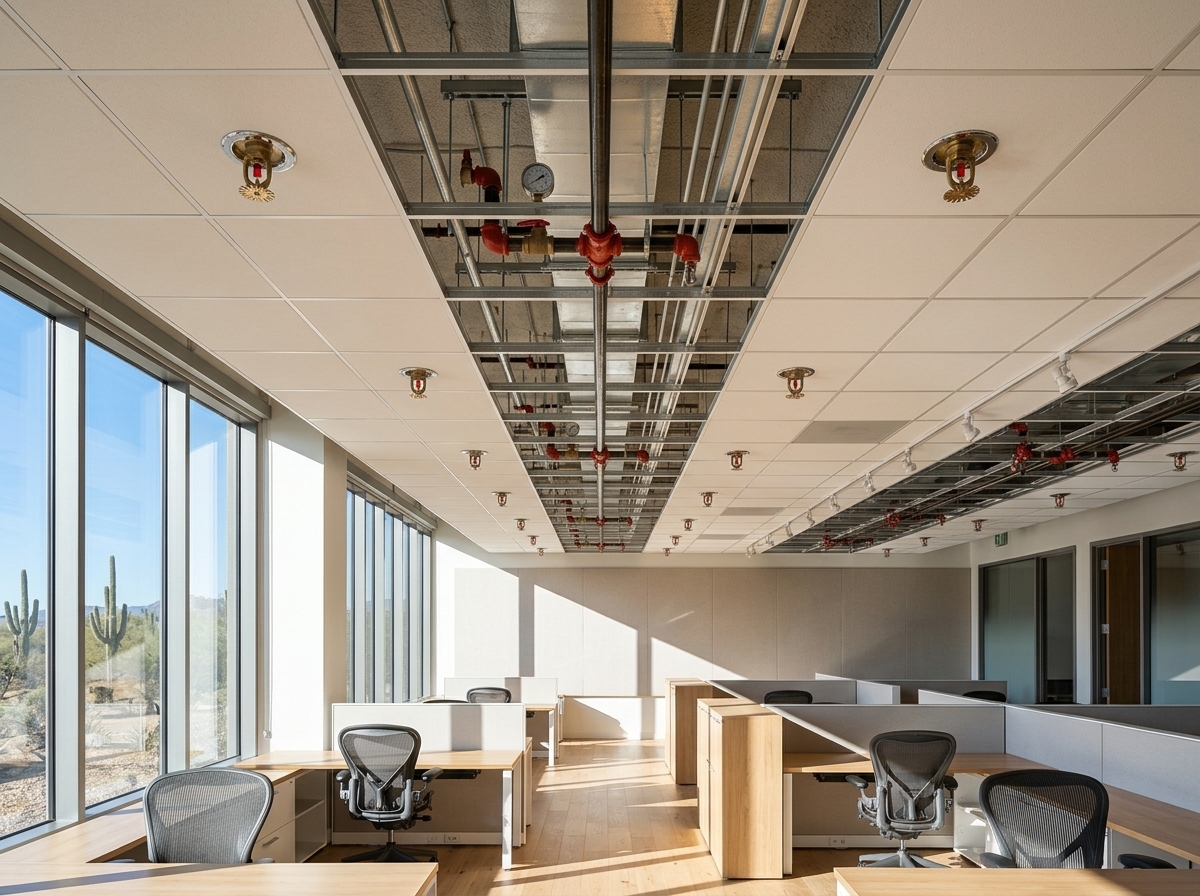
Sprinkler System Design & Installation (NFPA 13, 13R, 13D)
Engineered wet and dry sprinkler systems for new Tucson commercial, multifamily and residential construction, matched to the right NFPA standard.
Fire Sprinkler Inspection, Testing & Maintenance (NFPA 25)
Recurring inspection, testing and maintenance for Tucson buildings, with deficiency reports and documentation for the fire marshal and your insurer.
Retrofit & Tenant Improvement Sprinklers
Adding or modifying sprinklers in older commercial and multifamily buildings, and relocating heads when tenants change layouts.
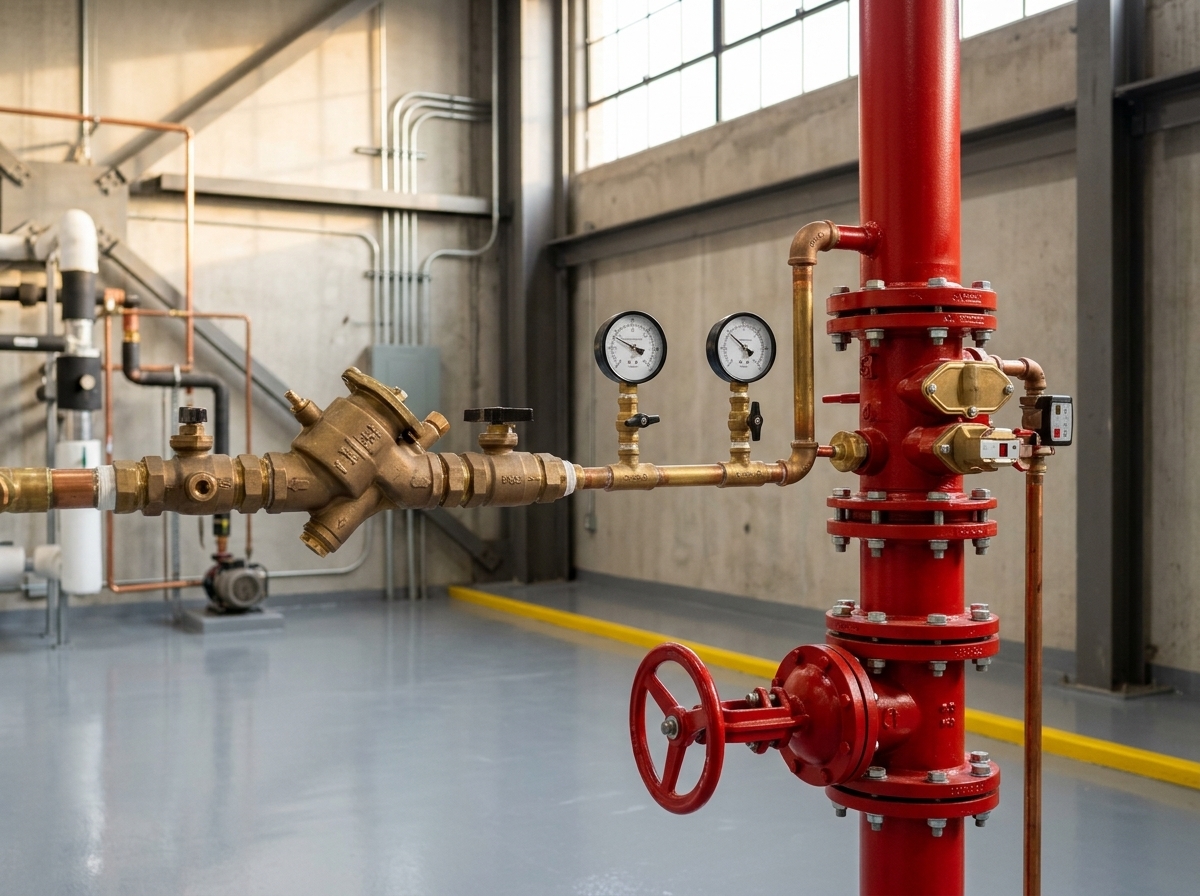
Backflow, Standpipe & Fire Pump Services
Backflow preventer testing, standpipe and fire pump service, and underground fire line work for Tucson properties.
Fire Sprinkler Systems We Install and Service
Areas We Serve
The Complete Guide to Fire Sprinkler Systems in Tucson, Arizona
Fire sprinkler work in Tucson is shaped by a few things that do not apply in most other metros: a Sonoran Desert climate where an unconditioned attic can run far hotter than the room below it, a municipal water supply that is notably hard, a basin that climbs from the valley floor into the Santa Catalina foothills through many separate pressure zones, and a patchwork of fire authorities. Inside the City of Tucson the Planning and Development Services Department and the Tucson Fire Department are the usual touchpoints, but Oro Valley, Marana and Sahuarita each run their own building departments, and fire districts cover large parts of the surrounding county.
The local building market is a mix that keeps sprinkler contractors busy in several different ways. The University of Arizona drives a steady supply of student apartments and mixed-use buildings around campus and along the Sun Link streetcar corridor. Downtown has seen adaptive reuse of older commercial and warehouse buildings next to new mid-rise infill. Healthcare, schools, senior living and retail anchor the north-side suburbs, and logistics and light industrial buildings are growing along the Interstate 10 and Interstate 19 corridors. Each of these building types brings a different sprinkler question, from NFPA 13 design in a shell building to NFPA 13R in a four-story apartment block.
What owners here actually need usually falls into three buckets. New projects need a designed, hydraulically calculated system that suits the occupancy and the available water supply and can pass plan review with the correct authority. Existing buildings need retrofits or tenant-improvement changes when walls move, ceilings change or a use changes. And nearly every sprinklered building needs recurring inspection, testing and maintenance under NFPA 25, with reports that reach whichever fire agency covers the property. The right edition and process depends on the address, so confirm current requirements with the reviewing agency before relying on any summary, including this one.
There is a practical case for using one contractor for design, installation and service. When the same team that laid out the system also tests and maintains it, there is a single party who understands why a head was placed where it was, what the flow test showed, and how the backflow assembly was sized. In a climate where heat and mineral scale age systems in predictable ways, that continuity makes later deficiency corrections quicker and cheaper to diagnose. This guide explains the Tucson-specific rules and conditions so you can ask better questions, whoever you hire.
Tucson's Building Stock and What It Means for Sprinklers
Tucson's oldest core is built from adobe and early masonry. Barrio Viejo and the surrounding historic blocks hold one of the larger collections of nineteenth-century Sonoran-style adobe in the country, with thick walls, flat roofs behind parapets, and buildings that sit directly on the property line. Nearby, the Warehouse District and former railroad-era industrial buildings use brick, concrete and corrugated metal, and many have been converted to offices, restaurants, breweries and lofts. Those conversions often trigger a sprinkler question, because a change of use or a major renovation can bring a building into a code category it did not meet when it was built.
Most of the city grew after the Second World War, and the typical building from that era is a low-rise masonry or wood-frame structure with a flat or low-slope roof, a shallow cavity above the ceiling and little or no sprinkler protection. Mid-century courtyard apartments, strip centers and older medical offices all fit this pattern. Newer construction looks very different: four-story wood-frame apartments over podium parking, big-box and tilt-up concrete warehouses, and hospitals and senior-living campuses. Those typically need NFPA 13 or NFPA 13R systems from the start, designed around the available water supply.
Several issues recur across all of these eras. Unconditioned attics and roof voids can reach temperatures well above what a standard ordinary-temperature head is rated to tolerate, so head selection in those spaces matters. Stucco-and-parapet buildings often have little concealed space for pipe, so routing and visible piping become design decisions. Older steel pipe in a hard-water city can accumulate mineral scale and corrosion, which is why internal pipe assessments are worth taking seriously. And parapet roofs, exterior walls and deep overhangs mean that risers and valve rooms need to be placed deliberately so they stay accessible and protected from weather.
Sprinkler Plan Review and Permits in Tucson
Permitting authority: City of Tucson Planning and Development Services Department with the Tucson Fire Department; separate AHJs apply in Oro Valley, Marana, Sahuarita, and fire-district areas
Inside the City of Tucson, fire sprinkler submittals are generally processed through the Planning and Development Services Department, which coordinates fire plan review with the Tucson Fire Department. The city enforces the International Fire Code with local amendments, and sprinkler design is judged against the applicable NFPA standard, typically NFPA 13, 13R or 13D depending on occupancy. City submittal checklists have typically asked for scaled plans, hydraulic calculations tied to a water supply source, equipment cut sheets and the contractor's Arizona Registrar of Contractors license information, and a modeled flow test from Tucson Water has generally been acceptable as supply data. Underground fire lines typically require their own submittal and permit. Confirm the current checklist and adopted code edition with the city before preparing drawings.
Outside the city limits the AHJ changes, and it is easy to submit to the wrong office. Oro Valley, Marana and Sahuarita are incorporated towns with their own building safety departments, and several have been moving between code editions, so check which International Code edition applies on your permit date. In many of these areas a fire district acts as the fire authority for plan review and inspection; Northwest Fire District covers much of the Catalina Foothills and parts of Marana and Oro Valley, Golder Ranch Fire District serves much of the Oro Valley area, and other districts serve other parts of Pima County. For unincorporated land, Pima County Development Services handles building permits while the local fire district handles fire-specific review. Always confirm the AHJ for the parcel before design starts.
What triggers a sprinkler requirement depends on use, size and local amendments, not on a single rule. Commercial, assembly, educational, institutional and larger multifamily buildings are typically sprinklered under the adopted building and fire codes, and city amendments have set area thresholds for some groups. Alterations, additions and changes of occupancy can also bring a requirement. One-family and two-family homes are a special case: Arizona statute, A.R.S. 9-807 for municipalities and a parallel provision for counties, generally prevents local governments from requiring sprinklers in single-family detached homes or buildings with no more than two dwelling units, with an exception for ordinances adopted before December 31, 2009. Fire districts may still discuss sprinklers as one option for meeting fire-flow or access conditions, so homeowners should ask the AHJ what is mandatory and what is a voluntary alternative. Contractors must hold the appropriate Arizona Registrar of Contractors fire protection classification, commonly the C-16, R-16 or dual CR-16 license; verify any contractor's license on the Registrar's website.
What Drives Fire Sprinkler Costs in Tucson
Sprinkler pricing here moves with the building and the site more than with any rule of thumb. These are the qualitative drivers that tend to separate one Tucson project from another; a site visit and a flow test are the only reliable way to price a specific job.
- Available water supply and pressure zone
- Tucson Water serves a basin with big elevation changes, so static and residual pressure vary by pressure zone. A site with strong supply can often use a simpler design, while a low-pressure or high-elevation site may need larger pipe, a fire pump or a tank. Request supply data early, because the result can change the whole scope.
- Backflow assembly type and underground work
- Fire lines tied to public water typically need an approved backflow assembly, and the type depends on the hazard classification of the system. The assembly adds a pressure loss that must be included in the hydraulic calculations, and a long underground run, rock excavation or road crossing can add meaningful labor.
- Heat in attics, roof voids and exterior spaces
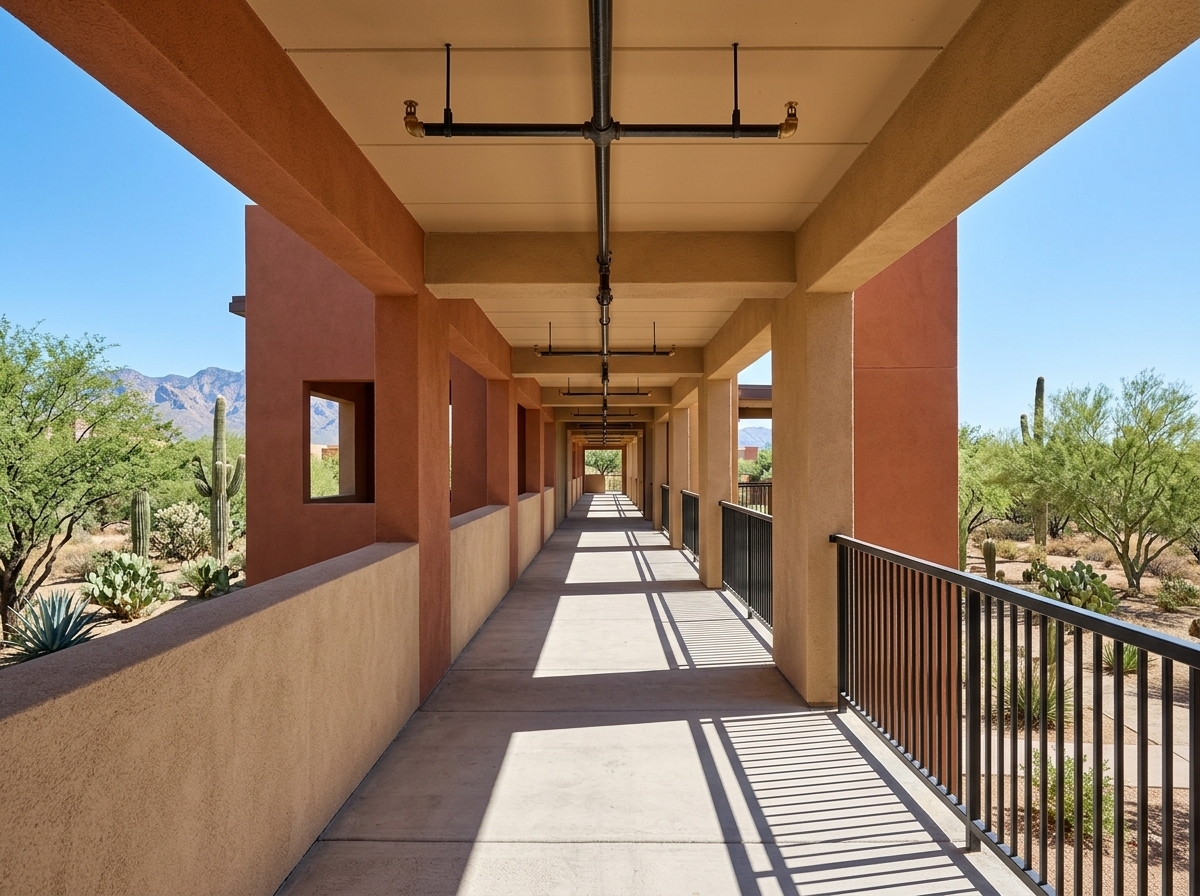
- Unconditioned attics, parapet cavities and exposed canopies can run well above room temperature in summer. Those areas often need intermediate-temperature heads or other design attention, and exposed exterior piping needs to be protected and supported for heat expansion and sun exposure.
- Building type and construction method
- A four-story wood-frame apartment, a tilt-up warehouse with storage, a hospital wing and a historic adobe conversion all call for different design standards, hazard classifications and coordination with other trades. Ceiling height, storage arrangement and finishes in a given space affect head type and spacing.
- Retrofit constraints in older buildings
- Adding sprinklers to a building that was not designed for them means finding pipe routes, ceiling space and a riser location in a structure with thick masonry walls or limited cavities. Working in occupied buildings, protecting finishes and phasing the work also affect labor.
- Jurisdiction, review cycle and inspections
- Permit fees, submittal formats and review times differ between the city, the towns and the fire districts. Rework from a rejected submittal, unwitnessed tests or a failed final all cost schedule time, so careful early coordination with the correct AHJ is a real cost saver.
Seasons & Climate in Tucson
Tucson's climate shapes the construction calendar more than most owners expect. Summer highs commonly reach or exceed 100 degrees Fahrenheit, with the hottest stretch arriving in June before the monsoon begins. Crews working on roofs, in attics and on exposed risers in July and August need earlier start times, hydration plans and realistic production rates, and that affects scheduling and labor. The National Weather Service defines the monsoon season as running from June 15 through September 30, and afternoon thunderstorms, gusty winds and flash flooding can interrupt trenching and underground fire line work, so excavation sequencing is worth planning around the storm season.
Winter is the more comfortable working window, and it is when many exterior and underground projects get scheduled. Freezing temperatures do occur in Tucson and are more frequent at higher elevations in the foothills and in outlying valleys, so exposed piping, outdoor risers, fire department connections and dry-system components can still need freeze protection. Hard water is a year-round factor: mineral scale and corrosion develop over time regardless of the season, which is why trending test results and scheduling internal pipe assessments pay off in older systems. Allow extra lead time in the fall and spring, when school, university and healthcare owners often want to finish work between academic terms or seasonal surges.
Fire Sprinkler Project Timeline in Tucson
1. Discovery and AHJ confirmation (1-2 weeks)
Confirm the correct reviewing authority for the parcel, the adopted code edition, the occupancy and the sprinkler standard. Request water supply data from the water provider and gather architectural plans. Timing varies with how quickly flow data is returned.
2. Design and hydraulic calculations (2-4 weeks)
Prepare shop drawings, hydraulic calculations and equipment submittals, and fold in the backflow assembly pressure loss and any pump or tank. Larger or more complex buildings typically take longer.
3. Plan review and permit (2-6 weeks, varies)
Review times depend on the jurisdiction and workload and may include one or more rounds of comments. The underground fire line may be a separate submittal. Confirm current review timelines with the agency.
4. Underground and rough-in installation (2-8 weeks)
Trenching, underground pipe, hydrostatic testing and flush are followed by overhead pipe and head rough-in, coordinated with framing, ceilings, ductwork and electrical. Scope and building size drive this phase more than any other.
5. Testing and inspections (1-2 weeks)
Witnessed underground and overhead hydrostatic tests, alarm and flow-switch tests, and the final inspection. Failed or unscheduled tests are a common source of delay.
6. Handover and recurring ITM setup (1 week)
Deliver as-builts, test certificates and system documentation, and set the NFPA 25 inspection schedule and reporting path with the fire authority, so the first annual cycle starts on time.
Tucson Fire Sprinkler FAQ
Who reviews fire sprinkler plans in Tucson?
Inside the City of Tucson, sprinkler submittals generally go through the Planning and Development Services Department, with fire plan review coordinated with the Tucson Fire Department. In Oro Valley, Marana and Sahuarita the town building department handles permits, and a fire district often reviews fire-specific items. Unincorporated areas typically involve Pima County Development Services plus the local fire district. Because the authority depends on the parcel, confirm it before design starts.
Do I have to put sprinklers in a new single-family home in Tucson?
Generally no. Arizona statute (A.R.S. 9-807 for municipalities, with a parallel county provision) prevents local governments from requiring fire sprinklers in single-family detached homes or buildings with no more than two dwelling units, apart from ordinances adopted before December 31, 2009. Some fire districts may discuss sprinklers as one way to meet fire-flow or access conditions, so ask the reviewing agency what is required and what is optional.
What contractor license is needed for sprinkler work in Arizona?
Fire protection work is licensed through the Arizona Registrar of Contractors. The classifications are typically C-16 for commercial, R-16 for residential and CR-16 for dual, which cover installation, alteration and repair of fire protection systems. Fire sprinkler work is not under the CR-34 painting classification. Verify any contractor's active license and classification on the Registrar's website, and confirm any additional permit or registration the local fire authority requires.
How often does a sprinkler system in Tucson need to be inspected?
NFPA 25 sets the frequencies, and the adopted fire code requires the system to be maintained. Typical items include weekly or monthly gauge and valve checks, quarterly alarm and waterflow tests, and annual inspection and main-drain testing, with longer-interval tasks like the five-year internal pipe assessment. Owners are responsible for scheduling, and reports typically go to the fire authority through whichever reporting method it specifies.
Is Tucson's hard water a problem for sprinkler pipes?
It can be over time. Tucson-area water is classified as hard, and mineral scale can build up in piping and around valves, strainers and heads, while corrosion in steel pipe is a separate concern in some systems. NFPA 25 calls for periodic internal assessments and obstruction investigations. If an inspection finds scale, tuberculation or leaks, a contractor can recommend flushing, treatment or replacement based on what is found.
Do I need a backflow preventer on my fire line?
Fire lines connected to the public water system typically need an approved backflow assembly, and the type depends on how the system is classified. Systems with antifreeze, auxiliary supplies or other hazards usually need a higher level of protection. Assemblies are tested annually by a tester registered with the water provider. Confirm the current requirements with Tucson Water or your local utility before design.
How hot is too hot for standard sprinkler heads in an attic?
NFPA 13 ties head temperature rating to the maximum expected ambient temperature at the ceiling, and ordinary-rated heads have a limit well below what a summer desert attic can reach. Intermediate-rated heads are commonly selected for unconditioned attics and roof voids. The right choice depends on the specific space, ventilation and insulation, so the designer should evaluate it for each project.
Does the sprinkler code apply if I am just remodeling a tenant space?
Often some part of it does. Moving walls, changing ceilings or changing the use of a space can require relocating or adding heads and revising the plans. Small modifications may be handled with a simplified submittal, while larger changes need full review. Ask the AHJ for its modification thresholds, because they differ between the city, the towns and the fire districts.
Sources & Further Reading
Local requirements change. Always confirm current rules with the permitting agency before starting work.
- Arizona Revised Statutes 9-807: Mandated fire sprinklers in certain residences prohibited
- Arizona Revised Statutes 11-861: County building codes
- City of Tucson Planning and Development Services Department
- Tucson Fire Department, City of Tucson
- Tucson Water, City of Tucson
- Northwest Fire District: Fire Prevention
- Arizona Registrar of Contractors
- NFPA 25: Standard for the Inspection, Testing, and Maintenance of Water-Based Fire Protection Systems
- NFPA 13: Standard for the Installation of Sprinkler Systems
- NFPA 13D: Standard for the Installation of Sprinkler Systems in One- and Two-Family Dwellings
- Pima County government
- Rio Nuevo, downtown Tucson development authority
- National Weather Service Tucson